
Triceratops Kids Encyclopedia: The Three-Horned Plant-Eating Dinosaur
What Kind of Dinosaur Was Triceratops?
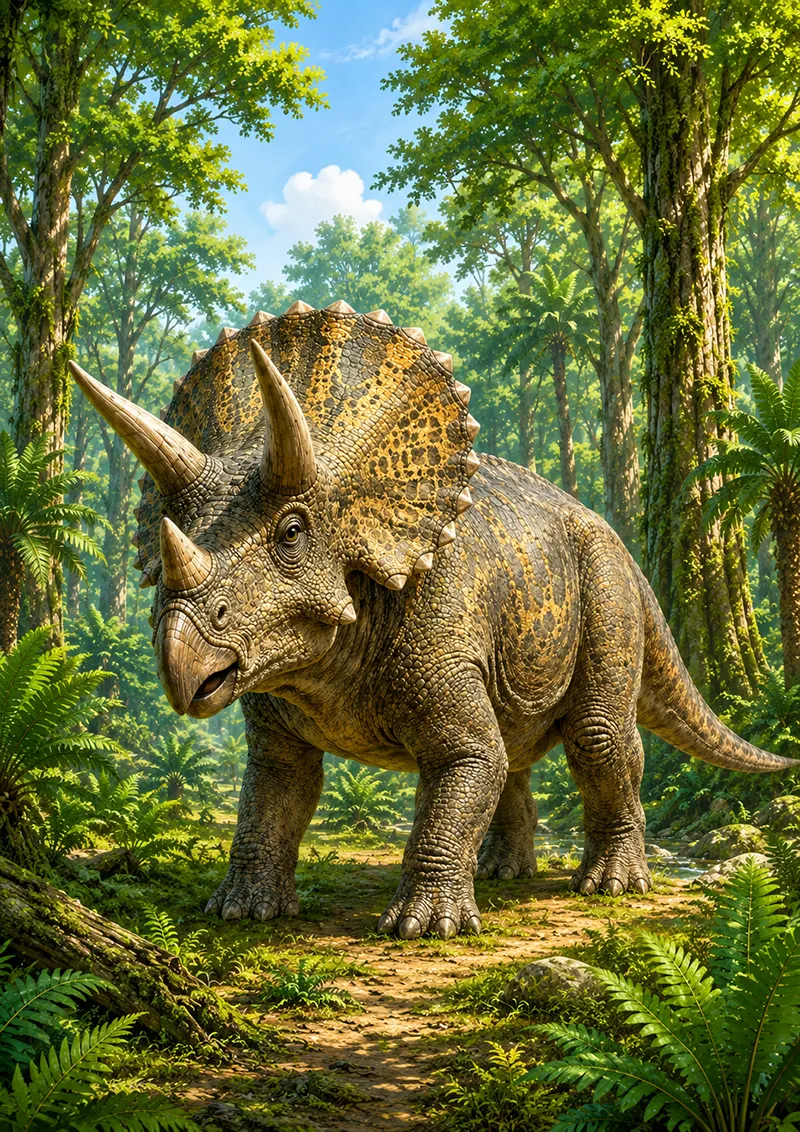
Triceratops was a plant-eating dinosaur with three horns on its head.
It ate plants such as leaves and tough vegetation.
Its body was big and strong, and it walked on four legs.
Triceratops lived near the end of the dinosaur age, about 68 to 66 million years ago.
Its Name Means “Three-Horned Face”
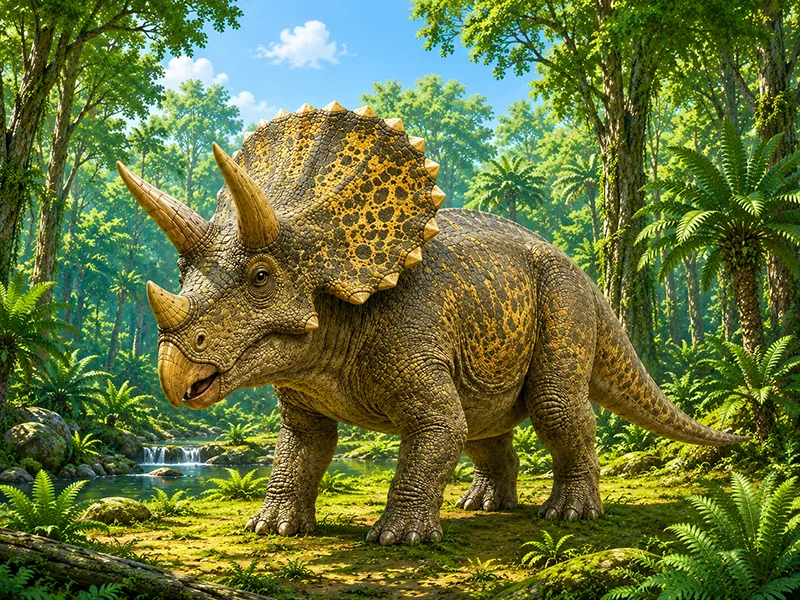
The name Triceratops means “three-horned face.”
Just like its name, it had three horns on its face.
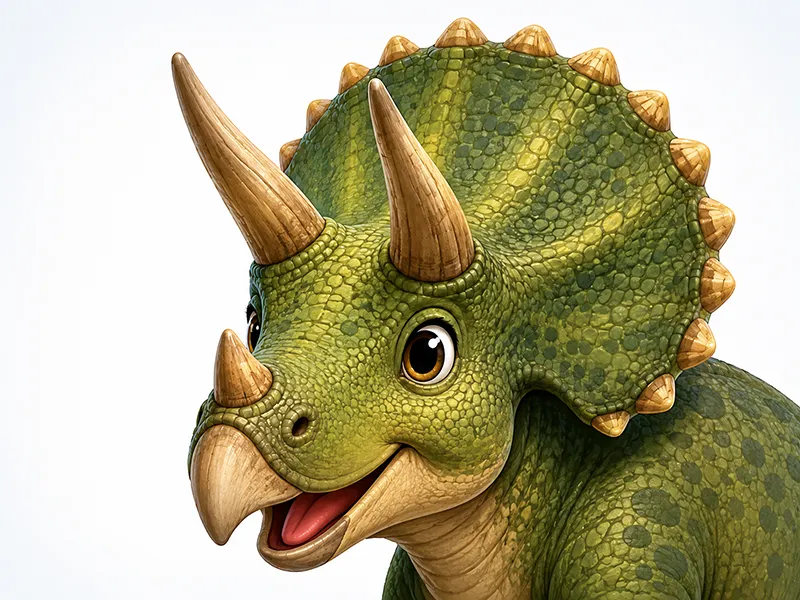
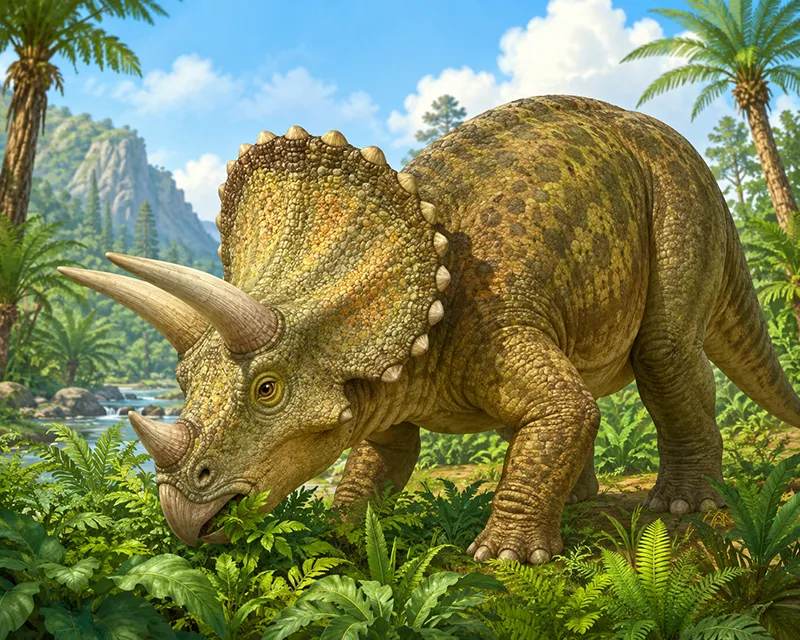
Two long horns were above its eyes, and one shorter horn was on its nose.
Behind its head, it had a big bony plate called a frill.
How Big Was Triceratops?
Triceratops was a very large dinosaur.
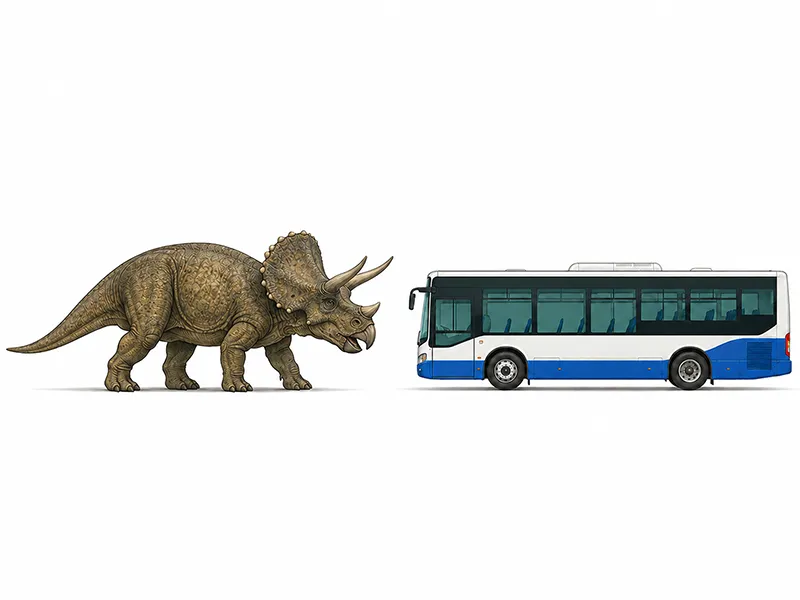
Scientists say it could grow to about 9 meters long.
That is about as long as a small bus.
Its weight estimates can be different, but it was a very heavy animal weighing several tons.
What Did Triceratops Eat?
Triceratops did not eat meat.
It was a plant-eating dinosaur.
The front of its mouth had a hard beak, a little like a parrot’s beak.
It may have used the beak to snip plants and its back teeth to cut tough food into smaller pieces.
Why Did It Have Horns and a Frill?
The horns and frill of Triceratops may have had many jobs.
They may have helped protect its neck, or helped other Triceratops recognize it.
Some fossils show marks of old injuries, so scientists think Triceratops may also have pushed or fought with each other.
Did Triceratops Live Alone or in Groups?
Scientists are still careful about saying whether Triceratops always lived in big herds.
Some other horned dinosaurs left group fossils, but Triceratops fossils are often found alone.
So scientists think Triceratops may have spent much of its life by itself.
Was It Related to Rhinos?
Triceratops looked a little like a rhinoceros because it had horns and a big body.
But it was not related to rhinos.
Triceratops was a dinosaur, and rhinos are mammals.
They may look a bit alike, but they belong to different animal groups.
What Fossils Tell Us
We cannot see a living Triceratops today because it disappeared a very long time ago.
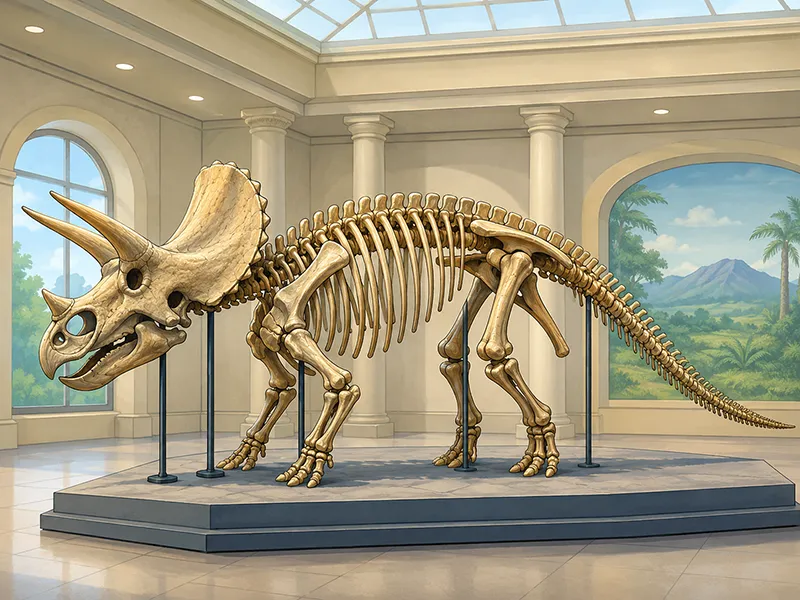
Instead, scientists study fossil bones and teeth.
Fossils help us learn what Triceratops looked like, what it ate, and how it may have lived.
Museum skeletons show its huge head, horns, and frill clearly.
Triceratops Quick Facts
Triceratops was a plant-eating dinosaur with three horns and a large frill.
It lived in North America about 68 to 66 million years ago and walked on four legs.
Its horns were impressive, but they were probably not just for looks.
They may have helped with protection, recognition, or pushing matches with other Triceratops.